Sonos vs. In-Wall Speakers: Which Is Better for Your Home?
Gurinder Khabnra • September 23, 2026
Sonos vs. In-Wall Speakers: Which Is Better for Your Home?
If you're planning better sound for your home, you've probably run into a choice that sounds like a matchup. Do you go with Sonos or with traditional in-wall and in-ceiling speakers? It's a fair question, but the two aren't really opposites. Understanding what each one does well makes it easier to pick the right setup, or combine them.
Sonos is known for wireless speakers that connect through your Wi-Fi network and are controlled with a single app. You can place a speaker on a shelf, plug it in, and have music playing within minutes. Adding more speakers over time is easy, and they can be grouped so the same song plays throughout the house or different music plays in different rooms. For renters, older homes, and anyone who wants a simple start, that flexibility is hard to beat.
Sonos also makes soundbars and subwoofers for TV audio, so one ecosystem can handle both music and movies. If you like a system that grows a little at a time, it's a very approachable option.
In-wall and in-ceiling speakers take a different approach.
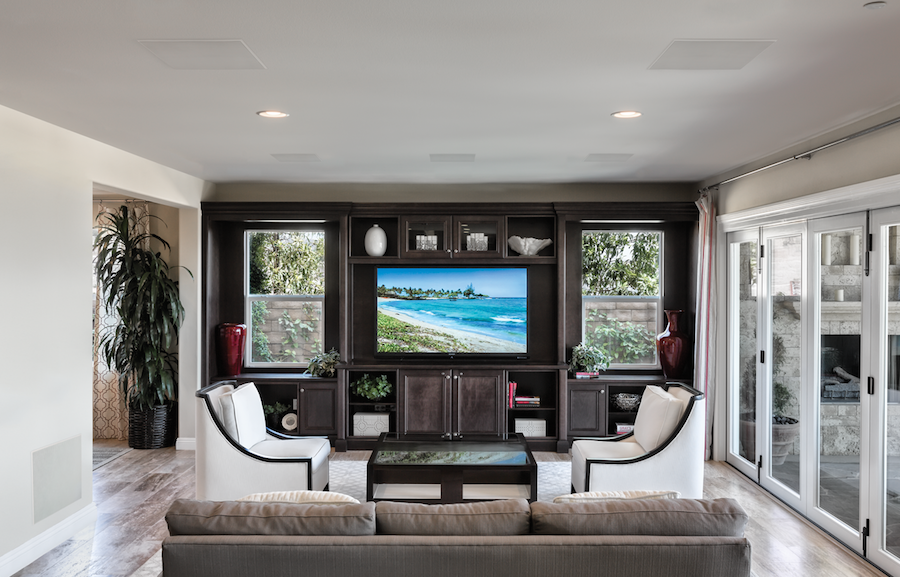
They're built into the structure of the room, so they're invisible or nearly so, and they don't take up floor or shelf space. They're powered by an amplifier, usually located in an equipment closet, and the system is controlled through a keypad, app, or a full automation platform. The result is a clean look that many designers and homeowners prefer, and it's a natural fit for larger homes and new builds.
Sound quality depends more on speaker quality and placement than on the category. A well-chosen in-ceiling speaker, properly positioned, can sound excellent for background music and everyday listening. For critical listening, a good pair of dedicated speakers in a room designed for it may still be the better choice. Sonos speakers can sound great for their size, and they're designed to perform well in typical rooms.
Installation is where the two differ most. Wireless speakers need little more than power and a strong network. In-wall speakers require running speaker wire, cutting holes, and setting up amplification. That's much easier during construction, but still very doable in an existing home with the right installer.
The best answer for many homes is to combine them.
A Sonos Amp or a similar streaming amplifier can power in-ceiling speakers, so you get hidden speakers with the simplicity of the Sonos app. Sonos also works with architectural speakers designed to blend into the walls and ceilings, which gives you that clean look without giving up the ease of use.
A quick conversation about your space, budget, and how you like to listen will usually point to the right choice. Once you know that, a professional can design a system that sounds great today and is easy to expand later.