Smart Home Technology for Aging in Place: Safer, Easier Living at Any Age
Gurinder Khabnra • September 23, 2026
Smart Home Technology for Aging in Place: Safer, Easier Living at Any Age
Most people want to stay in their own home as long as they can. Aging in place is about making that possible by adjusting the house so it stays safe, comfortable, and easy to use as needs change. Smart home technology is one of the most practical tools for doing that, and many of its benefits are helpful at every age, not just later in life.
Lighting is one of the best places to start. Falls often happen in the dark, and a house with automatic lighting is safer. Motion-activated lights can gently illuminate the path from the bedroom to the bathroom at night, at a low brightness that won't wake you fully. Lights that turn on as you enter a room, or a single button that turns on every light on the way in the door, take away the need to fumble for switches with your hands full.
Voice control and simple keypads make everyday tasks easier.
Adjusting the lights, playing music, or changing the temperature with a spoken command is especially helpful for people with limited mobility or dexterity. Wall keypads with large, clearly labeled buttons offer another simple option for people who prefer not to use phones or apps.
Motorized shades remove the need to reach or pull cords. They can open and close on a schedule or with a button, which is a real convenience for tall windows and hard to reach spots. Automated shades also help regulate light and temperature, keeping rooms comfortable without extra effort.
Security and peace of mind matter for the person living in the home and their family. A video doorbell lets you see who's at the door before opening it, without getting up. Smart locks eliminate the worry of lost keys and make it simple to grant access to a caregiver, a housekeeper, or a family member. A monitored alarm system with smoke and carbon monoxide detection can alert emergency services if something happens.
Sensors can add a quiet safety net.
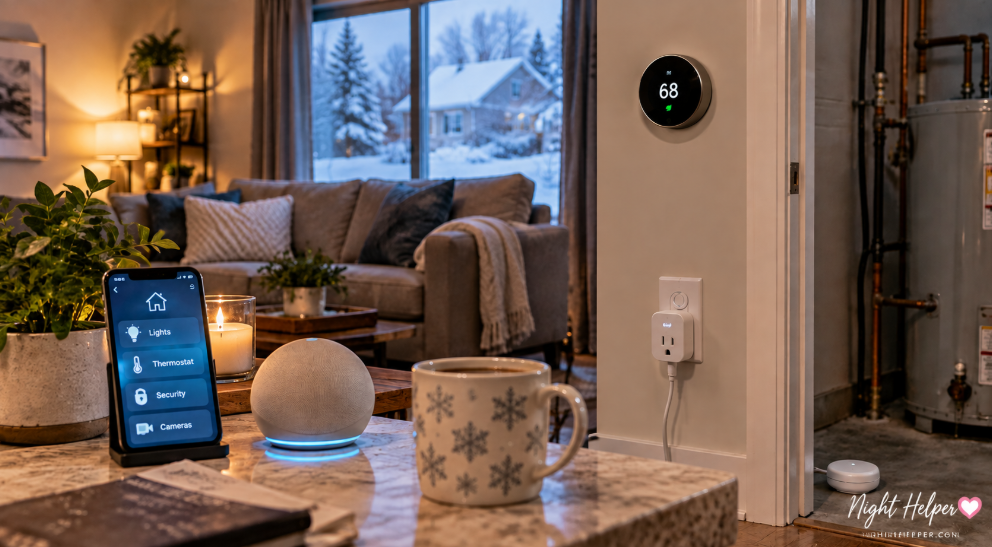
Water leak sensors, freeze alerts, and temperature monitoring catch problems early. Some setups can also let family members receive a simple notification if the front door is left open or if the usual morning routine doesn't happen, without invasive cameras inside the house.
Comfort is part of safety too. Smart thermostats keep temperatures steady and can be adjusted by a family member remotely, which is helpful if someone lives alone. Systems can also handle routines automatically, like turning off lights at bedtime and locking doors, so there's one less thing to remember.
The most important part is designing around the person, not the technology. The best systems are simple, familiar, and respectful of privacy. Involving the homeowner in the planning, choosing controls they find comfortable, and starting with a few features that solve real problems leads to something that actually gets used.
A good installer can walk through the home, listen to the concerns, and put together a plan that grows over time. When done well, smart technology helps people live independently and confidently for longer. It gives families peace of mind as well.