OLED vs. QLED vs. Projector: Choosing the Right Display for Your Media Room
Gurinder Khabnra • September 23, 2026
OLED vs. QLED vs. Projector: Choosing the Right Display for Your Media Room
The screen is the centerpiece of any media room, and the options can be confusing. OLED, QLED, and projectors all deliver impressive pictures, but each one shines in different conditions. The right pick depends on your room, your lighting, and how you like to watch.
OLED TVs produce light from each individual pixel. When a pixel is supposed to be black, it turns off completely, which gives OLED its famous deep blacks and excellent contrast. Colors look rich, and the picture stays consistent when viewed from the side, which is great for wide seating areas. OLEDs are often favored in rooms where lighting can be controlled, like a dedicated theater or a living room with shades.
The tradeoffs are brightness and care.
OLED screens generally don't get as bright as the best LED-based sets, so they can look less punchy in a very sunny room. There's also a small risk of burn-in, where a static image displayed for a long time can leave a faint ghost. Modern OLEDs include features to reduce the risk, and for most people who watch varied content, it's not a big concern.
QLED TVs are LED-backlit LCD screens that use a layer of quantum dots to improve color. They're typically brighter than OLED, which makes them a strong choice for bright rooms with lots of windows. High end models use many small zones of backlighting to improve contrast, and they've narrowed the gap with OLED in recent years. They also don't share the burn-in concern, making them a good option for screens that show a lot of sports, news, or gaming with fixed elements.
Projectors offer something a TV can't. A truly enormous picture.
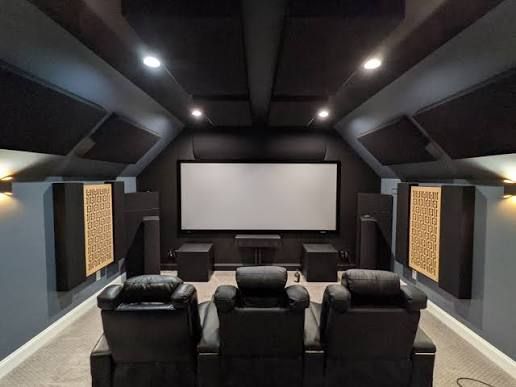
A projector paired with a screen can deliver 100 inches or more at a cost that's much lower than a TV of the same size. That's the reason they're a cornerstone of dedicated home theaters. Nothing matches the cinematic feeling of a huge image in a dark room.
The catch is light control. Projectors work best when the room can be made dark, and a bright room washes out the image. Ambient light rejecting screens can help, and shades that close on command make a big difference. Projectors also need a proper installation, with the right throw distance, mounting, and cabling, and lamps or light sources eventually need attention.
Room size and viewing distance matter for all three. A larger screen is more immersive, but only if you sit at the right distance, so it helps to think about seating before you choose a size. Wall-mounted TVs are also easier to place when the wiring and mounting are planned in advance.
A simple rule of thumb: OLED suits controlled lighting and premium picture quality, QLED suits bright rooms and everyday viewing, and a projector suits a dedicated dark room and a giant screen. Talking through your room and habits with a professional will help you choose, and make sure the display, sound, and lighting all work together.